
Screenshot Capture - 2026-03-11 - 16-43-52.png

How to Calculate Your Home’s Generator Load: A Practical Guide for Oklahoma Homeowners

Power outages in Oklahoma can happen unexpectedly. Severe thunderstorms, tornadoes, high winds, and even winter ice storms can knock out electricity for hours or days. For homeowners who rely on consistent power for comfort and safety, installing a standby generator is one of the most reliable solutions. However, one of the most common questions homeowners ask before installing a generator is: “What size generator does my house actually need?”

Choosing the correct generator size is critical. A generator that is too small may struggle to power essential appliances, while an oversized generator can lead to unnecessary installation costs.

Understanding how to calculate your home’s electrical load will help ensure you install a generator that fits your needs while keeping your household comfortable during outages.
Why Generator Sizing Matters

Standby generators work by automatically supplying electricity to your home when utility power fails. The generator must be capable of handling the total electrical demand of the systems you want to run. If the generator is undersized, issues like overloading the generator, tripping breakers, appliance damage, and shortened generator lifespan can occur.

Proper load calculations ensure your generator operates efficiently and safely during outages.

Understanding Electrical Load

Electrical load refers to the amount of electricity required to power devices and appliances in your home. Every appliance uses a certain number of watts.

When planning a generator installation, the goal is to determine the total wattage required to run essential systems simultaneously. Common appliances that homeowners typically want to power during an outage include:

  • Refrigerators and freezers

  • HVAC systems

  • Lighting

  • Internet and communication equipment

  • Sump pumps

  • Medical devices

  • Security systems

  • Kitchen appliances

By identifying the most important equipment, homeowners can determine the minimum generator capacity required.

Step 1: Identify Essential Appliances

Start by making a list of the appliances and systems you want powered during an outage. Most Oklahoma homeowners prioritize:

Heating and Cooling Systems

Air conditioners, furnaces, or heat pumps are often the largest power consumers in a home.

Refrigeration

Refrigerators and freezers protect food and medications during outages.

Lighting

Basic lighting ensures safety and usability throughout the home.

Water Systems

Well pumps or sump pumps may be necessary depending on your property.

Electronics and Communication

Internet routers, phones, and laptops allow you to stay connected during emergencies.

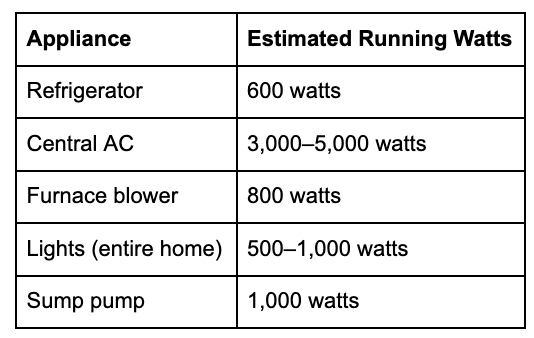
Step 2: Determine Appliance Wattage

Every appliance has a wattage rating that indicates how much electricity it uses. You can find this information:

  • On the appliance label

  • In the user manual

  • On manufacturer websites

However, some appliances require additional starting watts when they first power on.

Screenshot Capture - 2026-03-11 - 16-58-21.png

Step 3: Account for Starting Wattage

Appliances with motors often require more electricity when they start. This is known as surge wattage or starting wattage. For example:

  • A refrigerator may require 600 running watts but 1,800 starting watts.

  • An air conditioner may require 3,500 running watts but 6,000 starting watts.

Your generator must be able to handle these temporary spikes in demand.

Step 4: Add Up the Total Load

Once you know the wattage for each appliance, add them together to determine your required generator capacity. Example load calculation:

  • Refrigerator: 600 watts

  • HVAC system: 4,000 watts

  • Lighting: 800 watts

  • Internet and electronics: 300 watts

  • Sump pump: 1,000 watts

Total running load: 6,700 watts

In this scenario, a generator capable of handling at least 7–8 kW would likely be required, depending on surge loads.

Whole-Home Generators vs Essential Circuit Generators

Homeowners generally choose between two generator strategies.

Essential Circuit Generators

These generators power only the most important appliances during an outage. This option is more affordable and works well for smaller homes.

Whole-Home Generators

Whole-home standby generators automatically power most or all circuits in the house. These systems provide seamless power during outages and are ideal for larger homes or households with higher electrical demand.

Professional installation ensures the generator is correctly sized and connected through an automatic transfer switch.

These generators power only the most important appliances during an outage. This option is more affordable and works well for smaller homes.

Whole-Home Generators

Whole-home standby generators automatically power most or all circuits in the house. These systems provide seamless power during outages and are ideal for larger homes or households with higher electrical demand.

Professional installation ensures the generator is correctly sized and connected through an automatic transfer switch.

Why Professional Load Calculations Are Important

While homeowners can estimate their power needs, generator sizing is best handled by experienced professionals. Licensed generator installers consider factors such as:

  • Total electrical panel capacity

  • HVAC system requirements

  • Home size and layout

  • Future electrical needs

  • Startup loads and surge protection

  • Local electrical codes

Professional load calculations ensure your generator system is safe, efficient, and reliable.

Additional Factors Oklahoma Homeowners Should Consider

When selecting a standby generator, several additional factors influence system performance.

  • Fuel Type: Most residential standby generators operate on natural gas or propane.

  • Automatic Transfer Switch: This device detects power outages and automatically starts the generator.

  • Local Weather Risks: Oklahoma’s storm patterns make reliable backup power particularly valuable.

  • Noise and Placement: Generators must be installed in compliance with local regulations and manufacturer guidelines. The right installation ensures dependable performance during severe weather events.

Prepare Your Home Before the Next Power Outage

Power outages rarely happen at convenient times. Whether caused by severe storms, grid disruptions, or unexpected infrastructure failures, losing electricity can quickly disrupt daily life.

By understanding your home’s electrical load and installing the correct standby generator system, you can ensure your household stays safe, comfortable, and connected when the power goes out.

Blackout Generators helps Oklahoma homeowners choose the right generator systems for their homes with professional installation and expert guidance.

Find the Right Generator for Your Home

If you’re considering installing a standby generator but aren’t sure what size system your home needs, the team at Blackout Generators can help.

Our experts provide professional load calculations, system recommendations, and reliable installation services designed specifically for Oklahoma homes.

Contact Blackout Generators today to schedule a consultation and protect your home from unexpected outages.